A definition that created an argument
In 2006 the IAU defined a planet as a body that orbits the Sun, is round under its own gravity, and has cleared its neighbourhood. Pluto fails the third test: it shares its orbital zone with the Plutinos. It was reclassified as a dwarf planet, and the argument has never entirely stopped.
The scientific content of the dispute is real. Ceres holds roughly a third of the main belt's entire mass and is round; Pluto has five moons, a nitrogen atmosphere, and glaciers of nitrogen ice. Neither is well described as debris.
The reclassification argument has a long prehistory: exactly the same question was asked about Ceres in the 1800s. See the history page, and the discovery of Pluto for how this particular one unfolded.
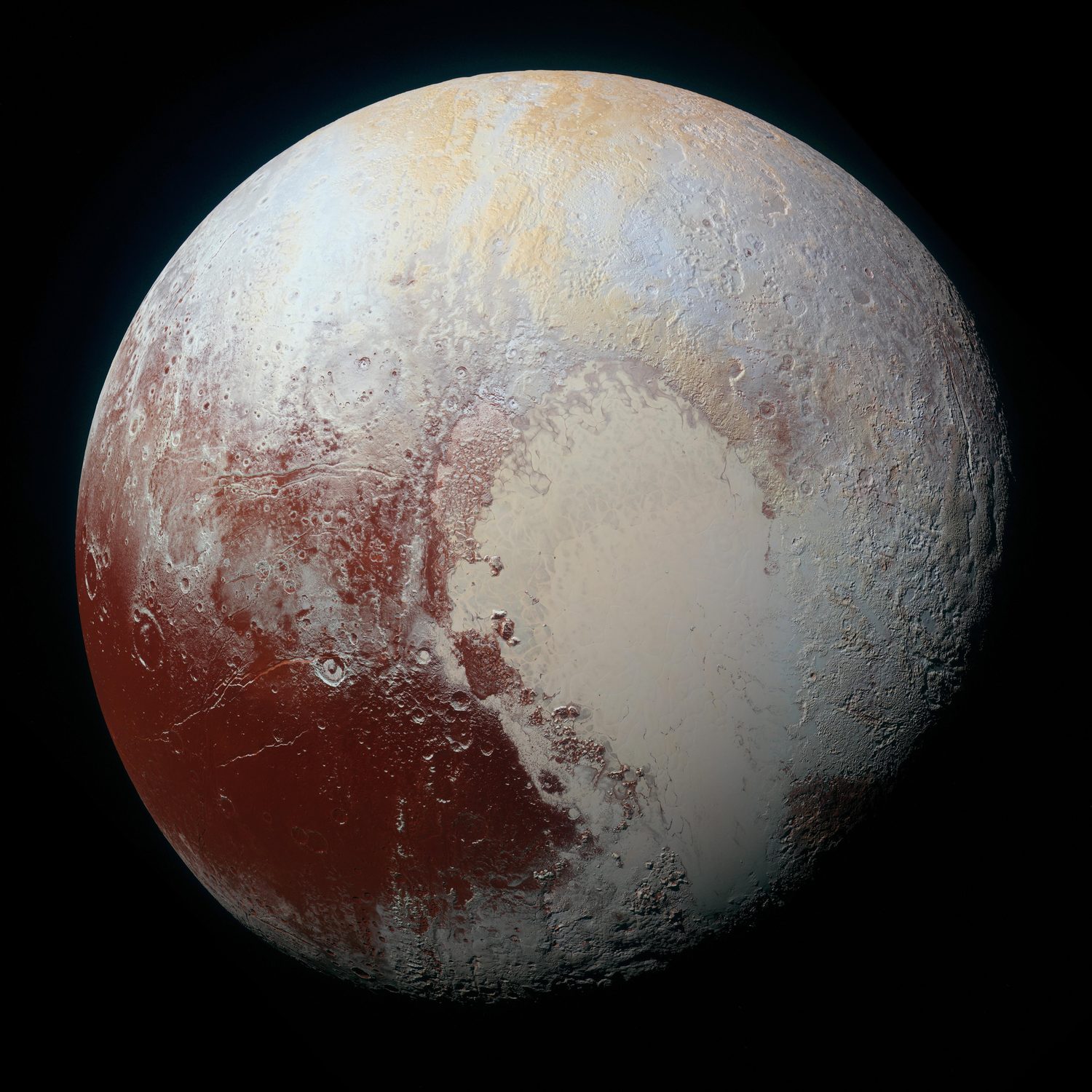
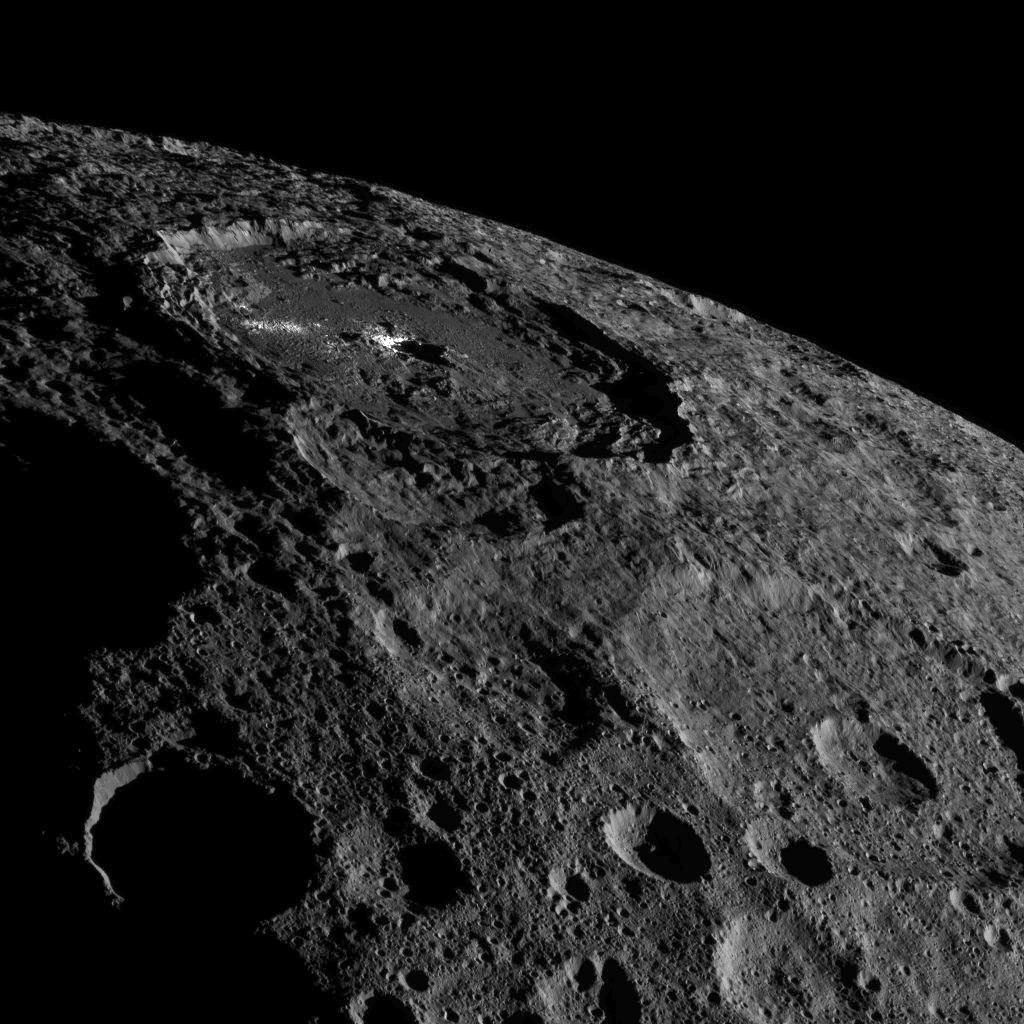
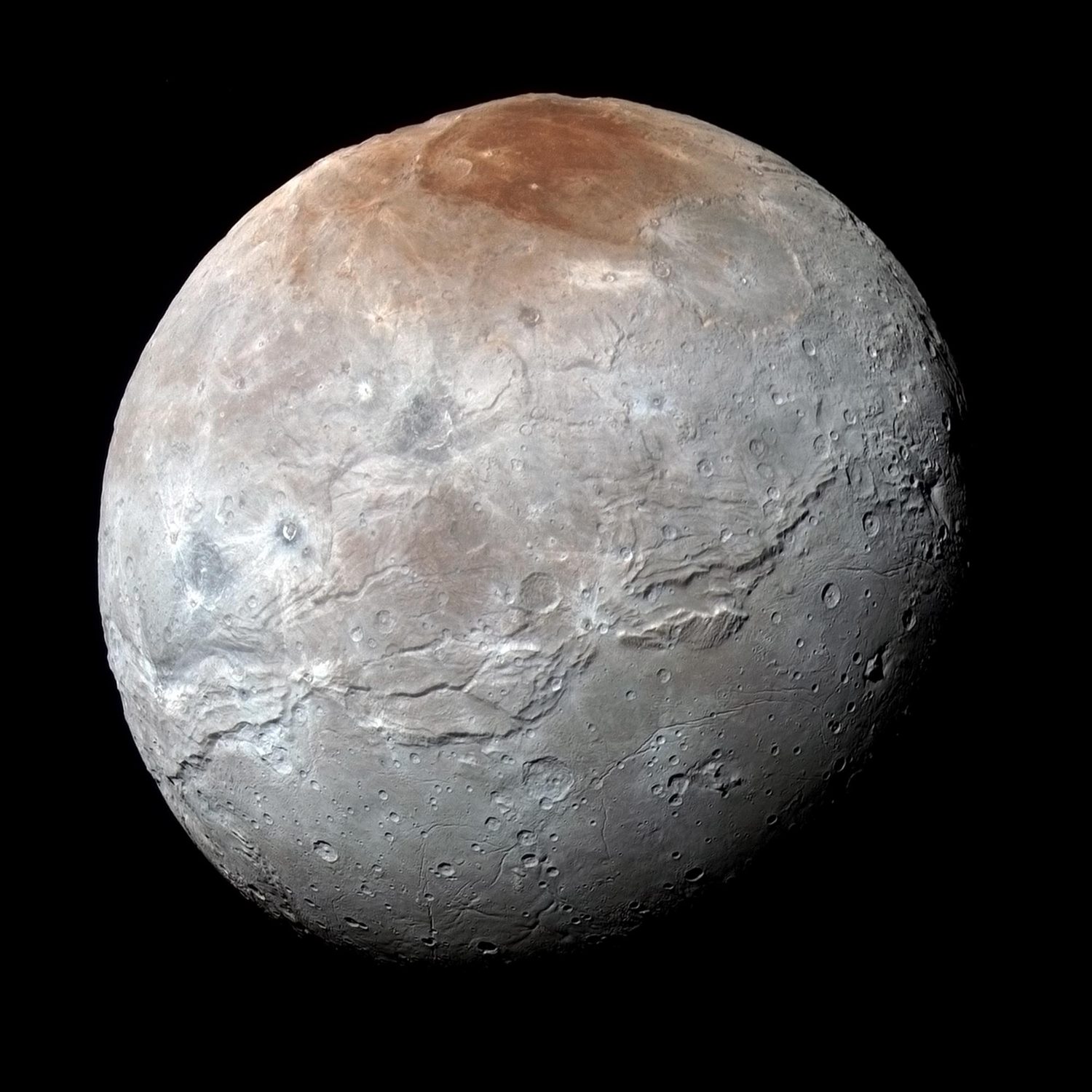
Five official, and a queue behind them
Ceres, Pluto, Haumea, Makemake and Eris are the five the IAU has accepted. Haumea is remarkable on its own: it spins in under four hours, which has stretched it into an ellipsoid roughly twice as long as it is thick, and it has both moons and a ring.
Another eight bodies — Gonggong, Quaoar, Sedna, Orcus, Salacia, Varuna, Ixion, Varda — are the ones most often put forward. The first few are widely thought to qualify; for the rest the sizes are uncertain enough that it is genuinely unsettled. None has been formally designated, so we show them as candidates, kept visually distinct, because "there are five dwarf planets" is the defensible statement.
Sedna, and the scale of the problem
Sedna's orbit runs from 76 AU at perihelion to beyond 1,000 AU, taking about 12,700 years to complete. It was near perihelion when discovered, which is the only reason it was found at all; for most of its orbit it is undetectable.
Whatever put Sedna on that orbit was not Neptune. Objects like it are the main evidence that the solar system's outer boundary is structured in ways we have not mapped.
Sizes for most dwarf-planet candidates come from a handful of occultations or thermal measurements. Interior structure is essentially unconstrained except at Ceres and Pluto, where spacecraft have visited.
The 3-D viewer plots all 1,557,369 catalogued objects at a fixed instant. Each population can be isolated, so this family can be viewed on its own against the planets.