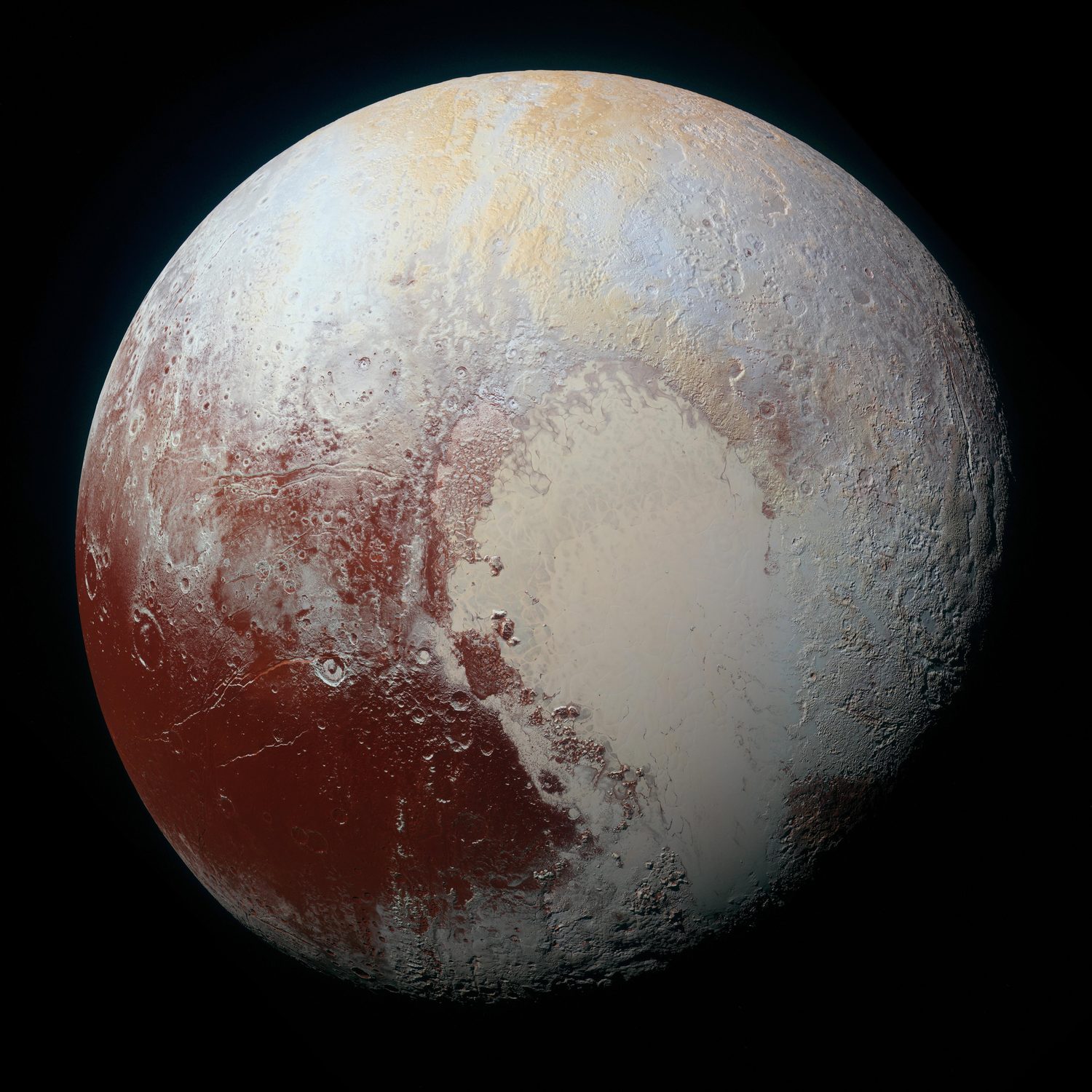
A planet that was not there
Percival Lowell — wealthy, obsessive, and best remembered for insisting that Mars was covered in canals — spent the last decade of his life hunting "Planet X". The motivation was that Uranus and Neptune appeared not to move quite as predicted, and an unseen massive planet would explain the residuals. Lowell searched from 1905 until his death in 1916 and never found it.
The residuals were not real. They were errors in the assumed mass of Neptune, and when that was corrected the discrepancy evaporated. Pluto, as it turns out, has about 0.2% of Earth's mass — nowhere near enough to nudge Neptune detectably. The search that found Pluto was based on a mistake, and Pluto is not what it was looking for. It was found because somebody searched carefully, in roughly the right part of the sky, for long enough.
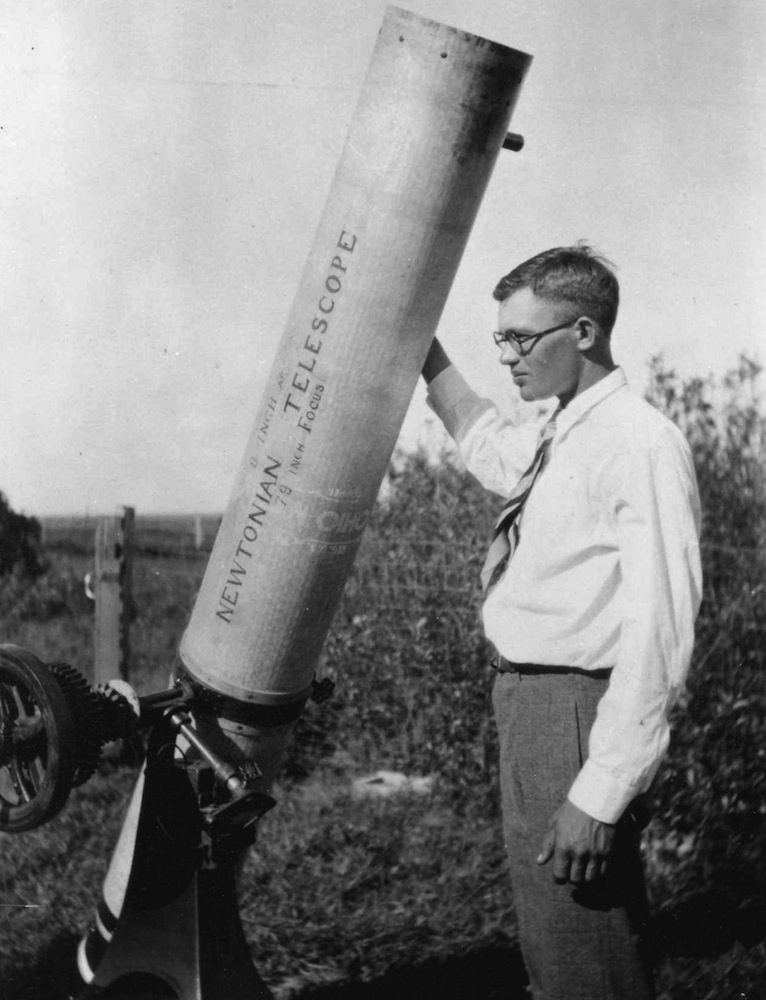
Clyde Tombaugh
The search resumed in 1929 with a new 13-inch astrograph. The man hired to run it was Clyde Tombaugh, a farm boy from Streator, Illinois, by way of Kansas, who had no college education and had ground his own telescope mirrors from farm machinery parts. He had mailed his drawings of Jupiter and Mars to Lowell Observatory hoping for advice, and was offered a job instead. He arrived in January 1929, and was 24 when he found Pluto thirteen months later.
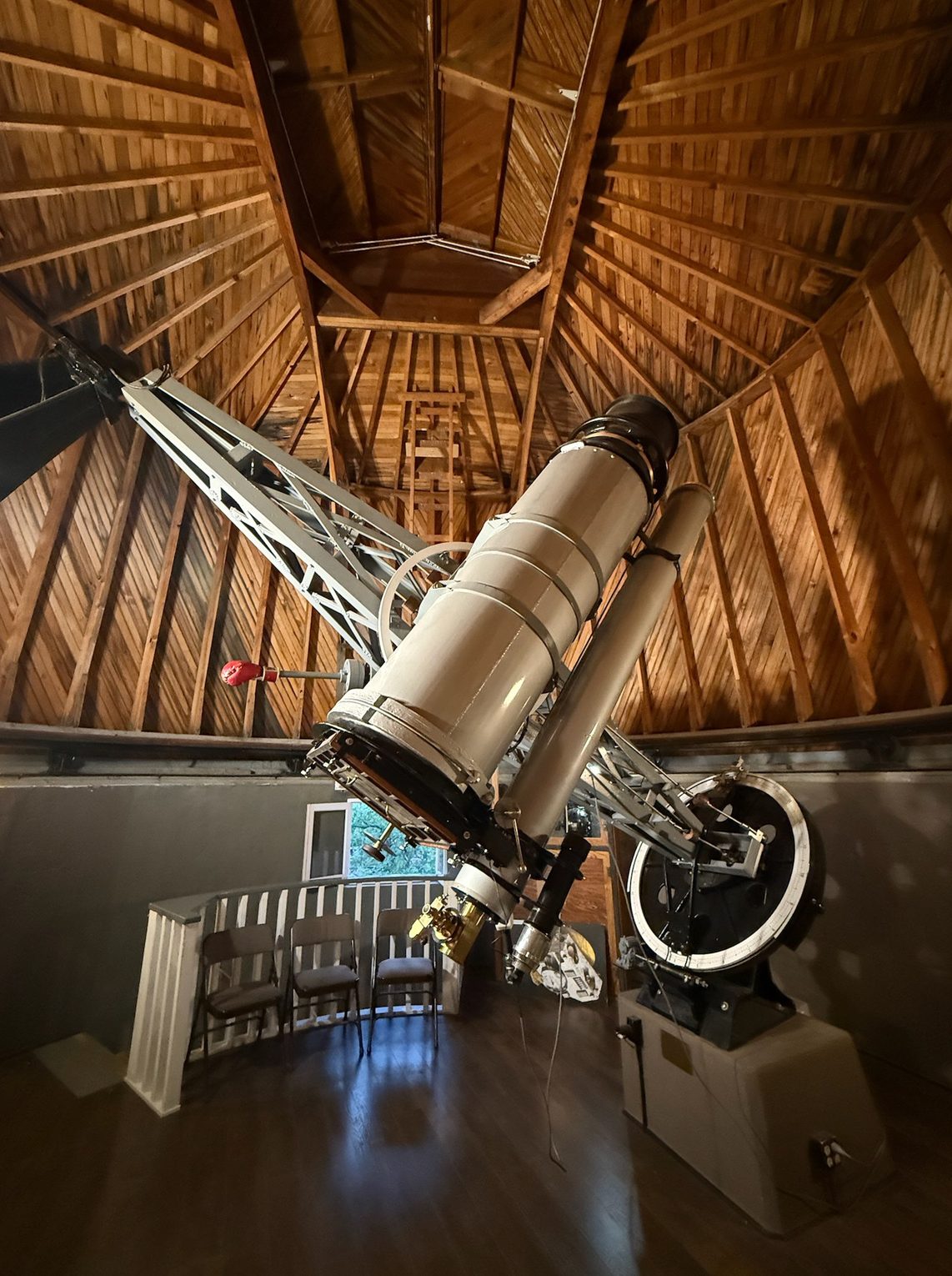
The work was brutally repetitive. Photograph a star field on glass; photograph it again days later; then load both plates into a blink comparator, a device that flicks the eyepiece between one plate and the other. Stars stay put. Anything in the solar system jumps. Each pair held tens of thousands of stars and had to be examined a few dozen at a time.
On 18 February 1930, comparing plates taken on 23 and 29 January, Tombaugh found a dot that had shifted a few millimetres. He checked it on a third plate, then went to tell the observatory director that he had found a planet. The announcement was made on 13 March — Lowell's birthday, and the anniversary of Herschel's discovery of Uranus.
The name came from Venetia Burney, an 11-year-old in Oxford who suggested it to her grandfather over breakfast. She lived until 2009, long enough to see a spacecraft launched toward it.
Rocks in Space observes from Lowell Observatory, on the same mesa in Flagstaff where those plates were taken and where the blink comparator still sits. It is difficult to work there and not take the discovery personally.
The field, 96 years later
On the night of 2 March 2026 we pointed a telescope at the patch of sky where Tombaugh found it — 7h 25.7m, +21° 24′ in Gemini, about 1.5° from the discovery position — and took 52 frames through clear, red, green and blue filters.
In the 96 years since, Pluto has travelled about 140° along its 249-year orbit and is now most of the way round in the opposite direction. The star field is a fixed backdrop; the thing Tombaugh found was never part of it. That is the distinction his blink comparator was built to expose, and photographing the field today makes it in the plainest possible way: everything that stayed is still there, and the one object that mattered has gone.
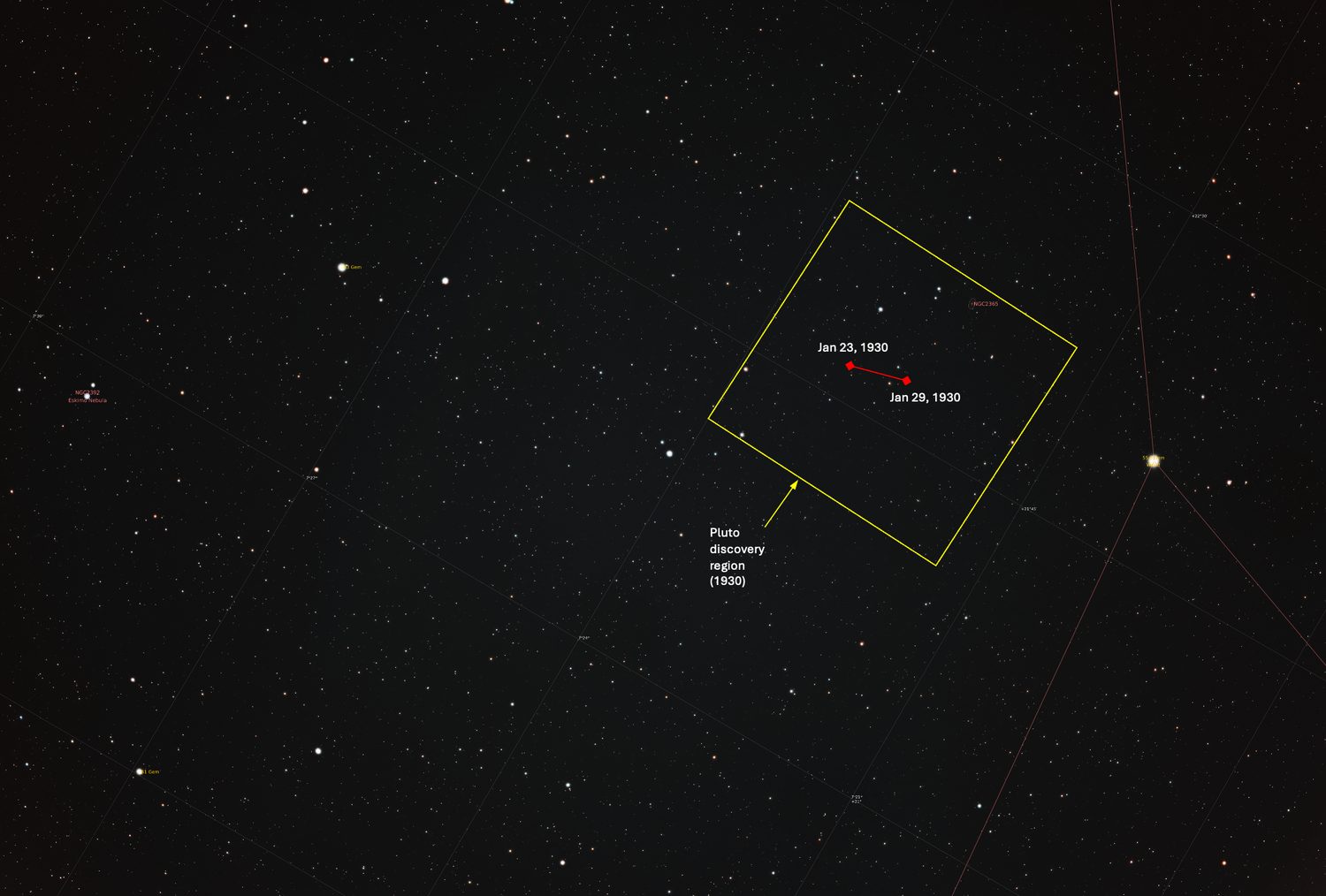
The frames are calibrated and archived but have not been photometrically reduced or published. Rocks in Space has no observational results yet; the photometry pipeline it will use is shared with The Variable Zoo Project and is being adapted for targets that move. This page will be updated when there is something measured to report, and not before.
What 96 years did to Pluto's status
A ninth planet
Announced as a planet, initially estimated to be roughly Earth-sized — because that is what the Planet X prediction required.
Charon, and a much smaller Pluto
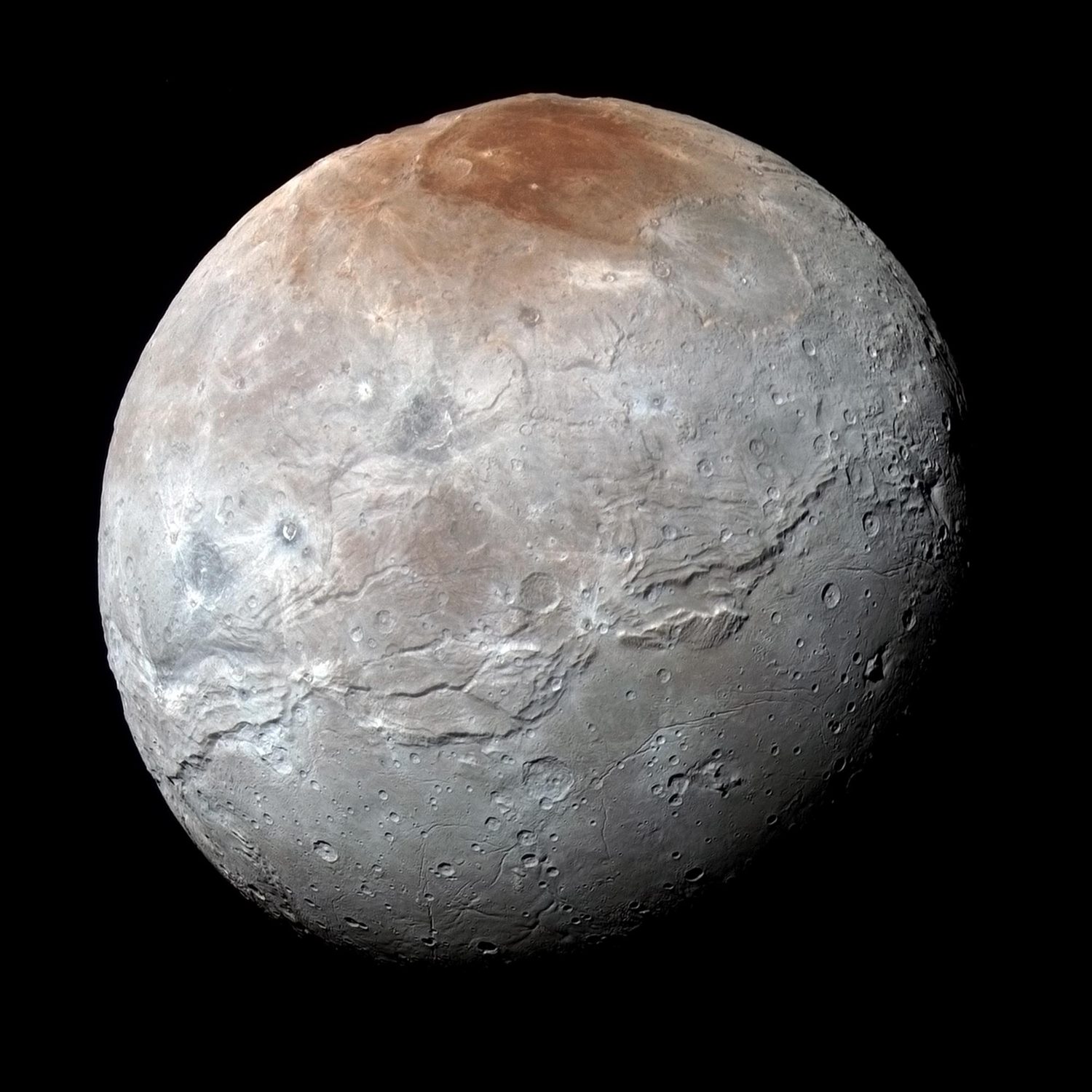
The discovery of a large moon allowed the system's mass to be measured directly for the first time. Pluto turned out to be far smaller than assumed — smaller than the Moon. Each revision to its size over five decades made it smaller.
It has company
The first trans-Neptunian object after Pluto was found, and then hundreds more. The catalog holds about 810 objects orbiting within about an AU of Pluto's distance from the Sun. A planet that shares its zone with hundreds of similar bodies is a different kind of object from one that does not.
Reclassified
The IAU defined a planet as a body that orbits the Sun, is round under its own gravity, and has cleared its orbital neighbourhood. Pluto meets the first two. It became a dwarf planet, and the argument has not stopped since.
Seen at last
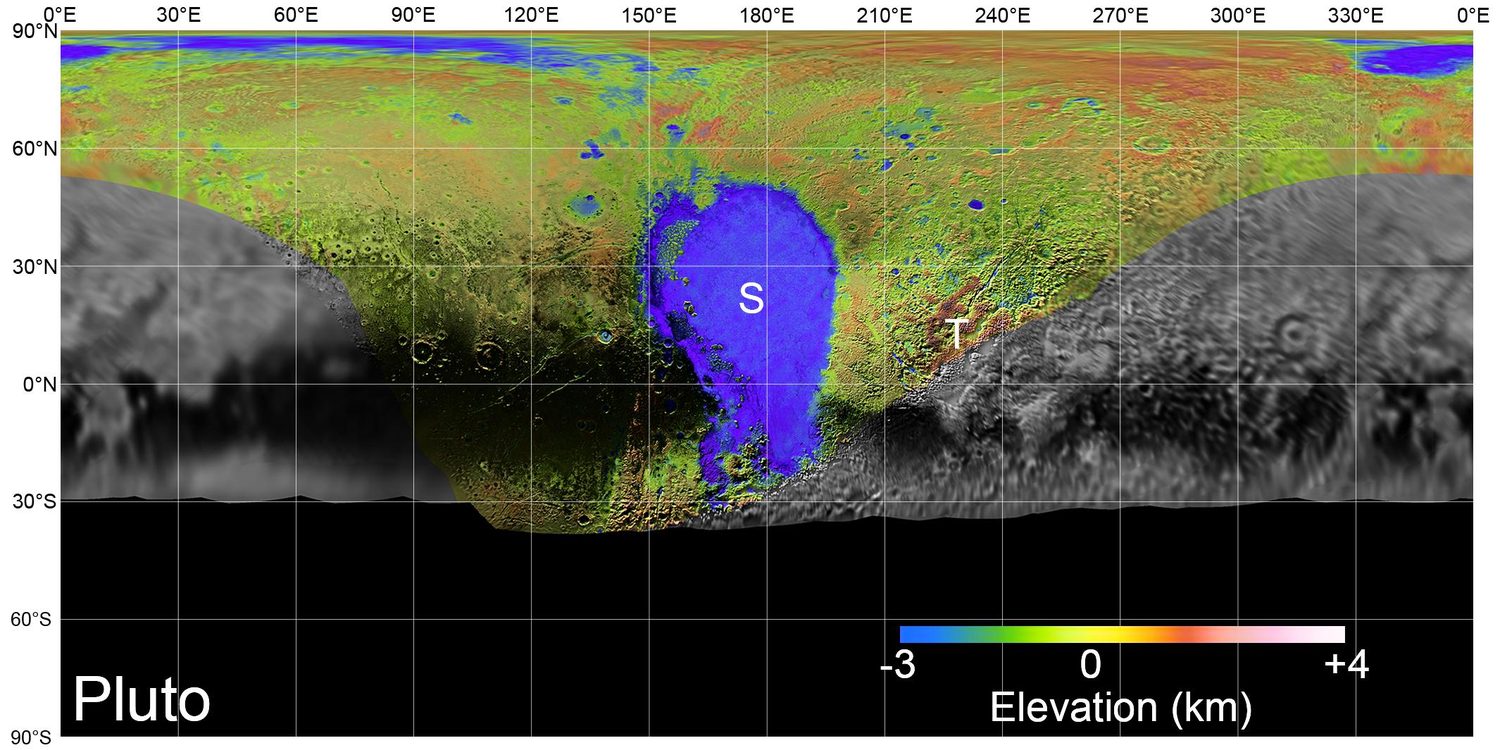
New Horizons flew past at 14 km/s, having launched in 2006 while Pluto was still a planet. It found nitrogen glaciers, a haze-layered atmosphere, mountains of water ice, and a surface young enough to be geologically active — on a world receiving 0.06% of the sunlight Earth gets. Some of Clyde Tombaugh's ashes were aboard. The bright basin is now formally Tombaugh Regio.


Pluto in this catalog
Pluto is not a special case in our database. It is one row, with the same
columns as the other 1,557,369 objects, classified TNO and
carrying the orbit below. It appears in the
3-D viewer as one point among 1.5 million, and its
orbit is drawn there with the other dwarf planets.
| Quantity | Value | Note |
|---|---|---|
| Designation | 134340 Pluto (1930 BM) | numbered as a minor planet in 2006 |
| Dynamical class | TNO | trans-Neptunian object |
| Semi-major axis | 39.59 AU | in 3:2 resonance with Neptune |
| Eccentricity | 0.252 | crosses Neptune's orbital distance |
| Perihelion / aphelion | 29.6 – 49.6 AU | closer than Neptune at perihelion |
| Inclination | 17.1° | steeply tilted for a planet-sized body |
| Orbital period | 249 years | has not completed one orbit since discovery |
| Absolute magnitude H | -0.55 | second-brightest known small body, after Eris |
| Known satellites | 5 | Charon, Nix, Hydra, Kerberos, Styx |
Queried live from the catalog at build time.
Pluto's perihelion at 29.6 AU is inside Neptune's orbit, which ought to be fatal. It is not, because the 3:2 resonance means Pluto completes two orbits for every three of Neptune's, so the two are never close together. Objects locked into that same resonance are called Plutinos, and their existence is evidence that Neptune migrated outward early on, sweeping the resonance through the disk and capturing whatever it crossed. Confirming that a particular object really is resonant takes a numerical integration rather than a glance at its orbital distance, so the count above is of Pluto's neighbours and not a census of Plutinos.