Where they come from
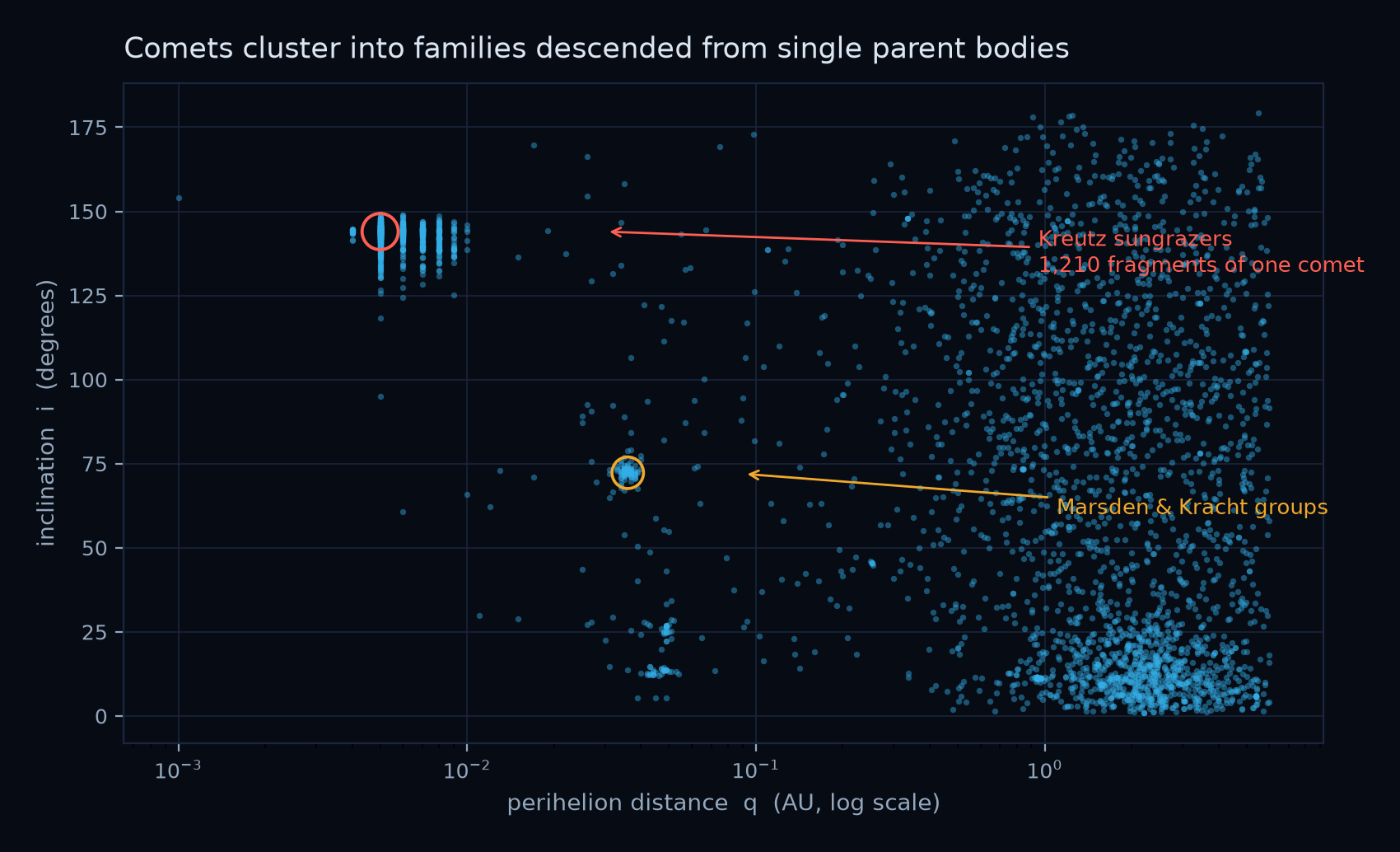
Jupiter-family comets have short periods and low inclinations, and arrive via the Centaurs from the Kuiper Belt. They have been heated many times and are relatively depleted.
Long-period comets come from the Oort cloud, a roughly spherical reservoir tens of thousands of AU out. They arrive on near-parabolic orbits from any direction, often on their first approach in millions of years, which makes them the most pristine material we can observe.
That distinction shows up in the data as a modelling problem: long-period comets frequently have no meaningful semi-major axis at all. Our orbit solver handles them with Barker's equation, using perihelion distance and time of perihelion instead.
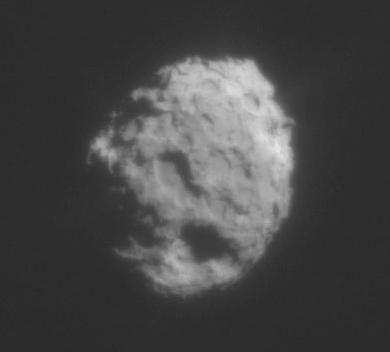
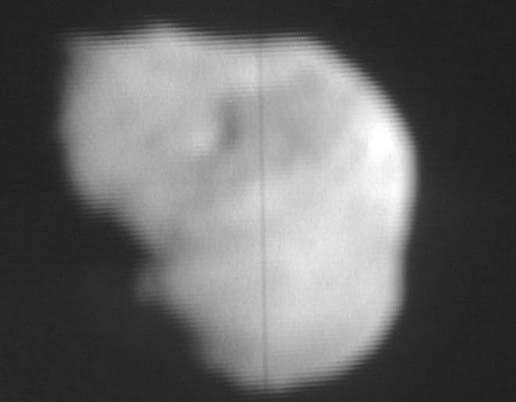
Three visitors from outside
3 objects in this catalog are not from here. 1I/'Oumuamua (2017) was inert and oddly elongated; 2I/Borisov (2019) was an unmistakable comet with an eccentricity of 3.36; and 3I/ATLAS (2025) is the most extreme yet at eccentricity 6.14 — a value no solar-system body can reach.
High eccentricity alone is not enough to claim interstellar origin. Two comets in the catalog exceed eccentricity 1.05 without qualifying: they are ordinary solar-system comets that a planetary encounter kicked onto an escape trajectory outward. Our statistics keep the two cases separate.
Comets that come apart
Cometary nuclei are fragile. 73P/Schwassmann-Wachmann 3 broke into dozens of pieces in view of modern telescopes, and about 73 objects in this catalog follow that orbit closely enough to belong to the break-up. Sorting genuine fragments from coincidental neighbours takes more than a similar orbit, so read that as an estimate.
The extreme case is the Kreutz group, which has its own page: over a thousand fragments of a single enormous comet that disintegrated centuries ago, still following the same orbit.
A famous catalogue of things that were not comets
Comets were the prize long before anyone cared about asteroids. A new one carried your name, and in the 18th century hunting them was a recognised way to make a reputation — which is why the most quoted list in amateur astronomy exists as a by-product of the hunt.
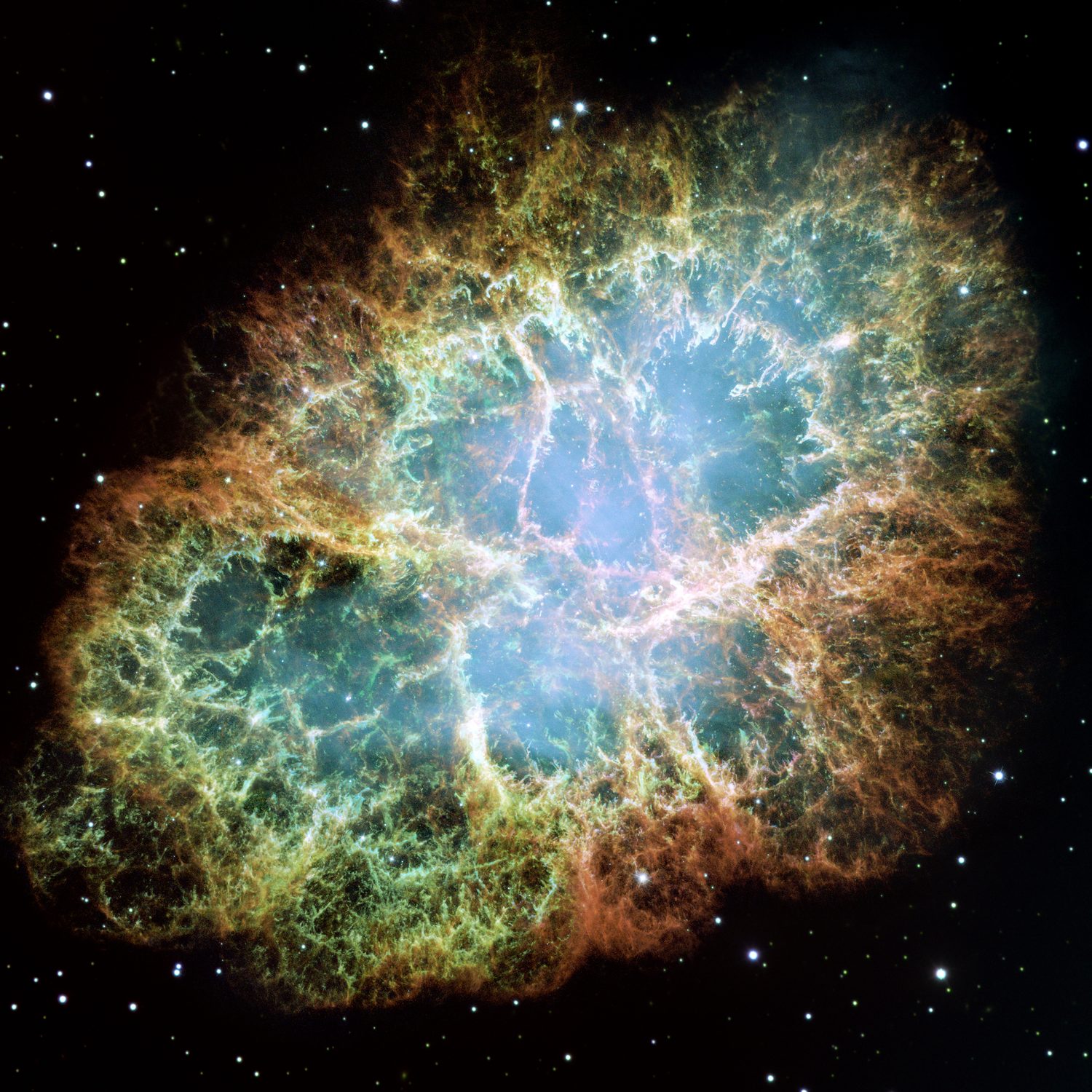
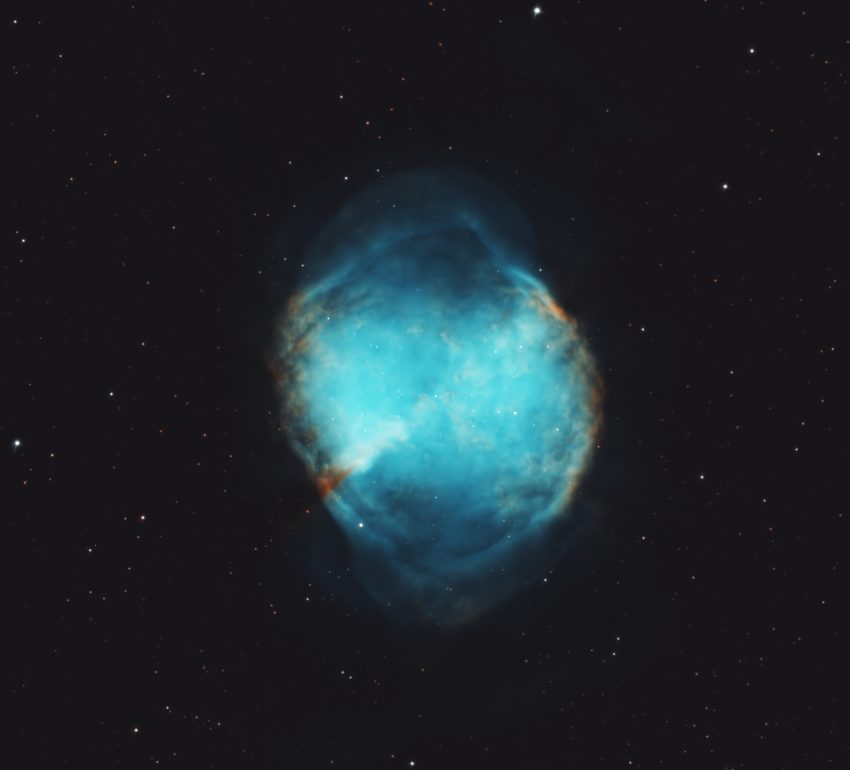
Charles Messier found or shared in the discovery of a dozen or so comets from Paris in the second half of the 18th century, and while sweeping for them he kept running into fuzzy patches that refused to move against the stars. A comet moves; these did not. His catalogue, first published in 1774, was compiled largely so that he and others would stop re-checking the same impostors — and it is now a staple of amateur observing: M1 the Crab Nebula, M31 the Andromeda Galaxy, M42 the Orion Nebula, M45 the Pleiades. Not every entry was a near-miss for a comet; some, the Pleiades among them, were added for completeness. But the catalogue's organising idea was what is not a comet.
The irony has outlasted the intent. Messier's comets are remembered by specialists, while the deep-sky objects he listed to get them out of his way — 103 in his own editions, 110 in the modern list after later astronomers added entries from his and Pierre Méchain's notes — are the backbone of amateur observing to this day. Beginners still work through the "Messier list" without knowing it began as a record of false alarms.
The one thing that told a comet from a smudge was motion. Come back the following night and a comet has moved against the stars while the smudge has not. That is still the test, applied several million times a night by the surveys below, by subtracting one image from the next.
Three of the things that were not comets

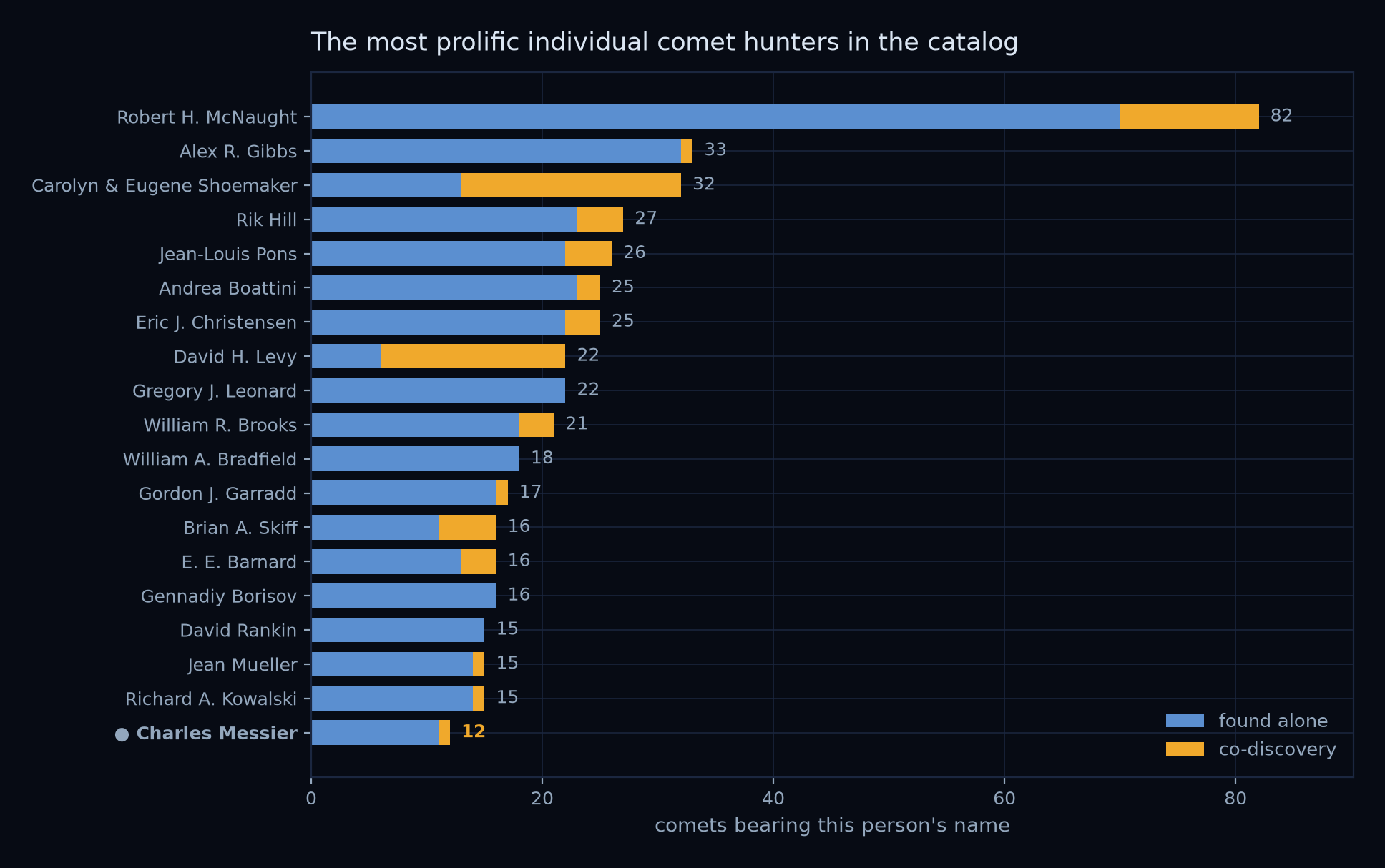
Messier swept for comets from a tower of the Hôtel de Cluny in Paris, and was good enough at it that Louis XV is said to have called him le furet des comètes — the comet ferret. He found or shared 12 comets between 1760 and 1798, and is remembered for the list of things that were not.
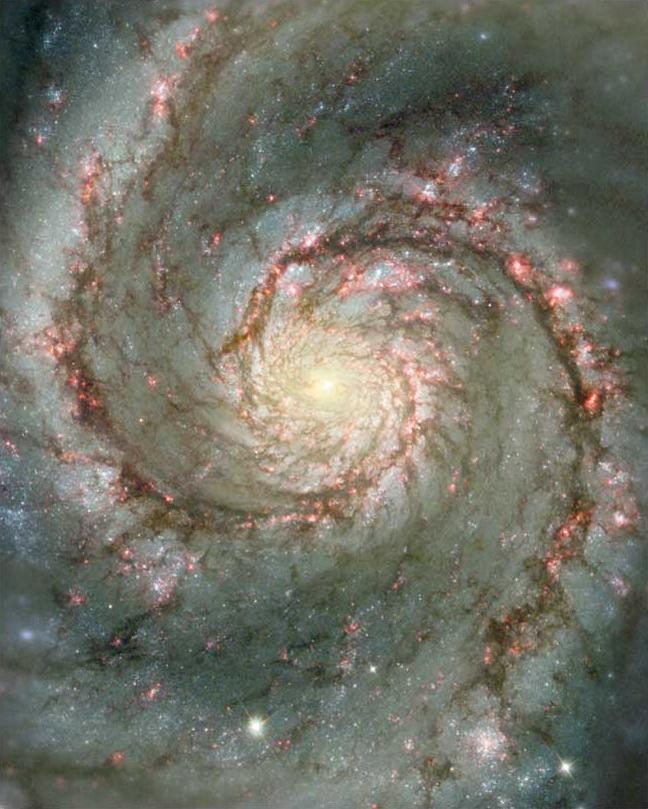
Here are three of those impostors as modern instruments record them. That is emphatically not what he saw: in a telescope of the 1760s each was a dim patch a few arcminutes across, soft-edged and shapeless — near enough to a distant comet to cost him a night's work.
Who finds the comets now
A comet is named for whoever found it, so the catalog carries its own record of who was watching. Read that record and it splits in two: a long tradition of people at eyepieces, and — since the mid-1990s — machines that outproduce all of them combined. Both halves below are counted from the same 3,806 named comets.
Now the same measurement for the automated programmes, on its own axis — because on a shared one the human chart would be a row of slivers. The scale is the point. SOHO (spacecraft) alone accounts for 1,463 comets, about 17.8× the lifetime total of the most prolific individual. The 25 programmes counted here hold 2,580 comets between them — 67.8% of every named comet on record.
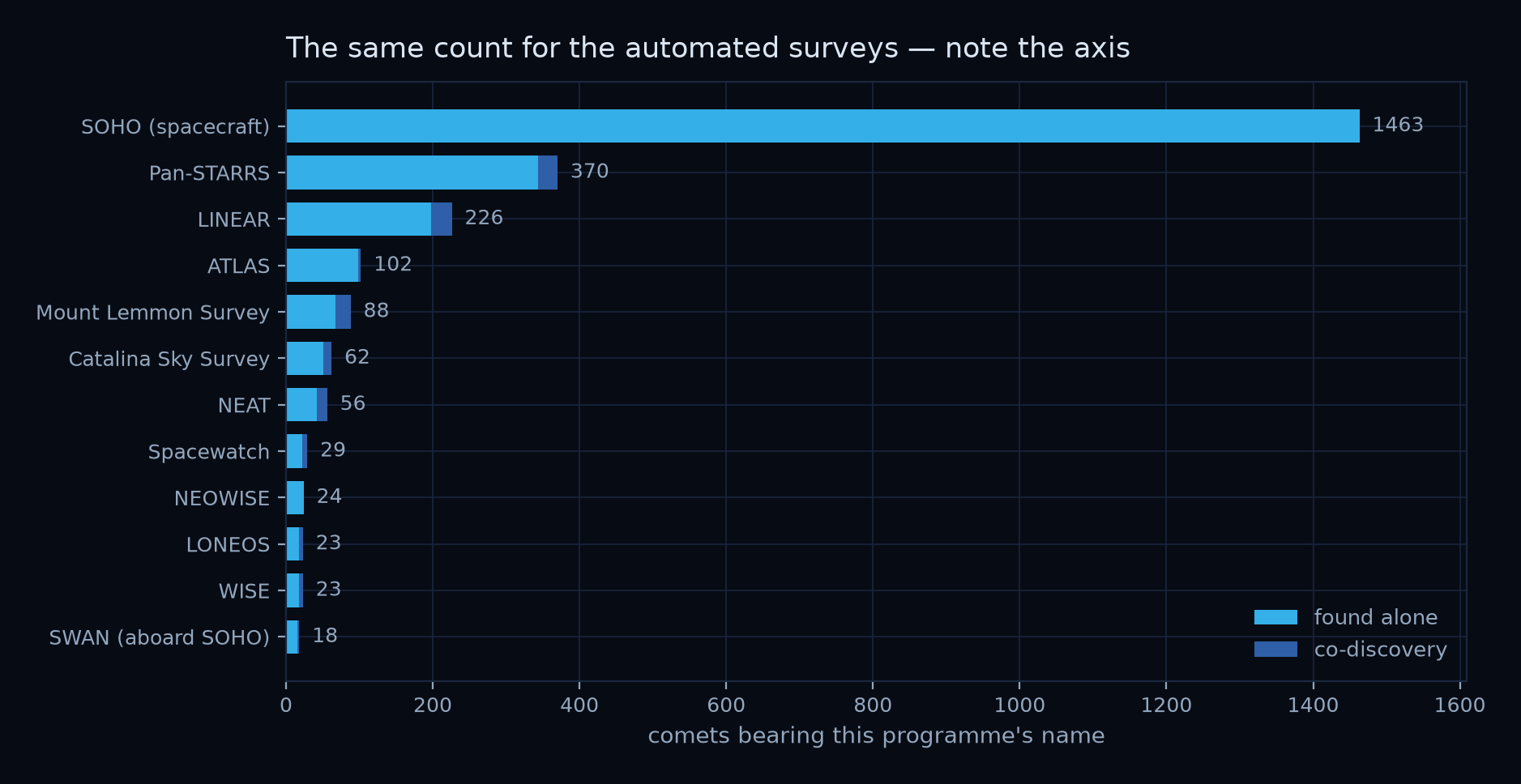
Two things are worth noticing before concluding that the amateur era is over. People are still on that list, and recently — but most of them are survey astronomers, so the name on the comet belongs to whoever recognised it in the data rather than to a rival of the machine. And the exception is durable: Gennadiy Borisov built his own telescope and used it to find the second interstellar object ever seen, in 2019. The surveys had imaged it and not noticed.
A comet's name in the catalog is its discovery credit, so nothing here was typed in from a reference. Three things had to be handled. Fragments are not comets — a comet that breaks up is catalogued once per piece, and collapsing them removes 151 rows; counting rows credited David Levy with 43 comets when the answer is 22. A name is not always a person — "Great comet" is a description and "SOHO" is a spacecraft, so names are classified from a curated table and anything unrecognised is reported rather than counted as somebody. And 110 comets carry no name at all (2.81%) and are left out; 90 of the 94 that can be dated are pre-1900, so the gap is antiquity rather than any modern backlog. One caveat the data cannot fix: this counts catalogued comets bearing a name, which is close to but not the same as historical credit. Messier is usually given 13 comets and this catalog holds 12.
Comet nuclei are almost never measured directly — the coma hides them. Sizes, shapes and rotation states are unknown for nearly the whole population.
A few well-known comets
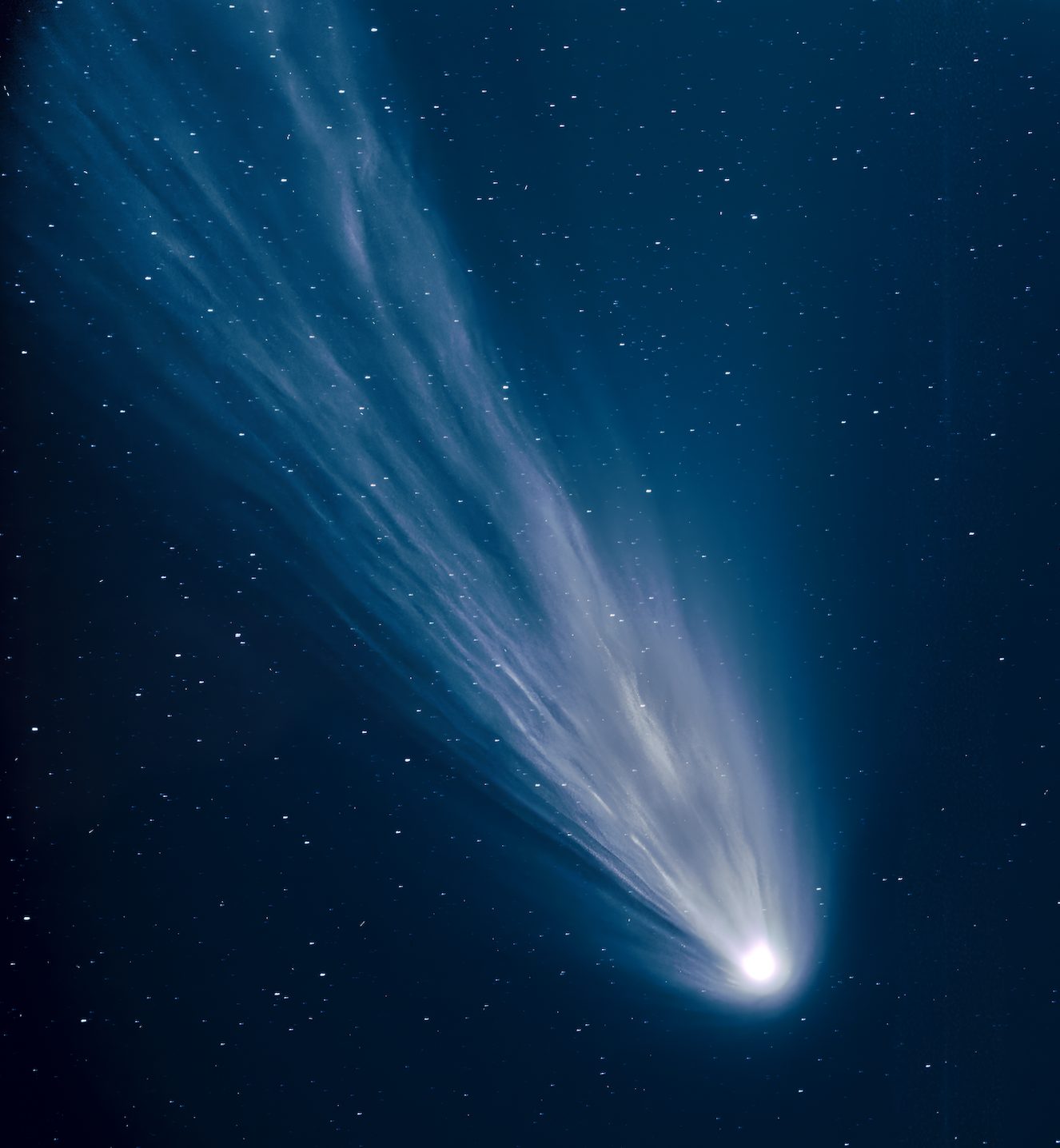
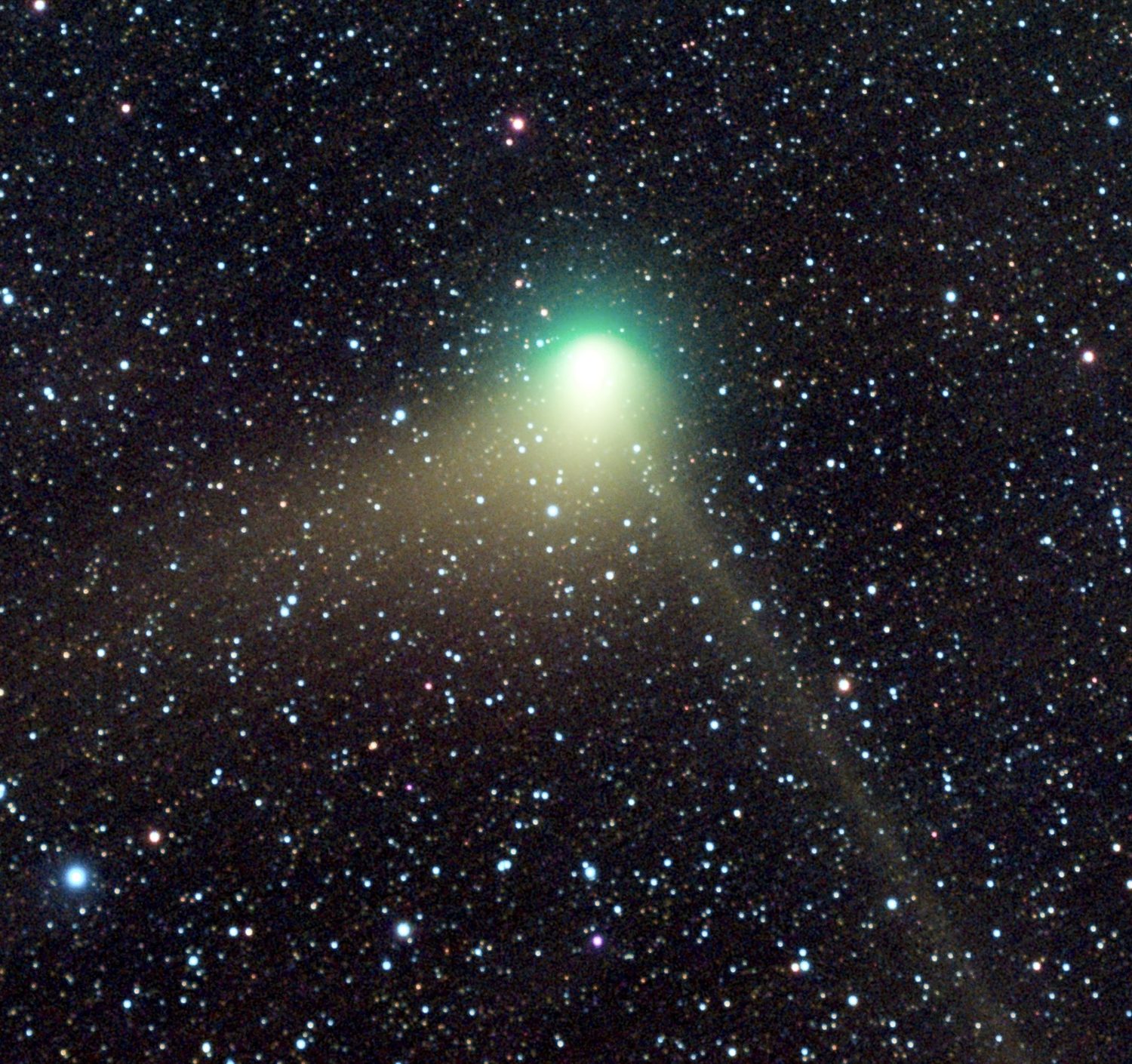
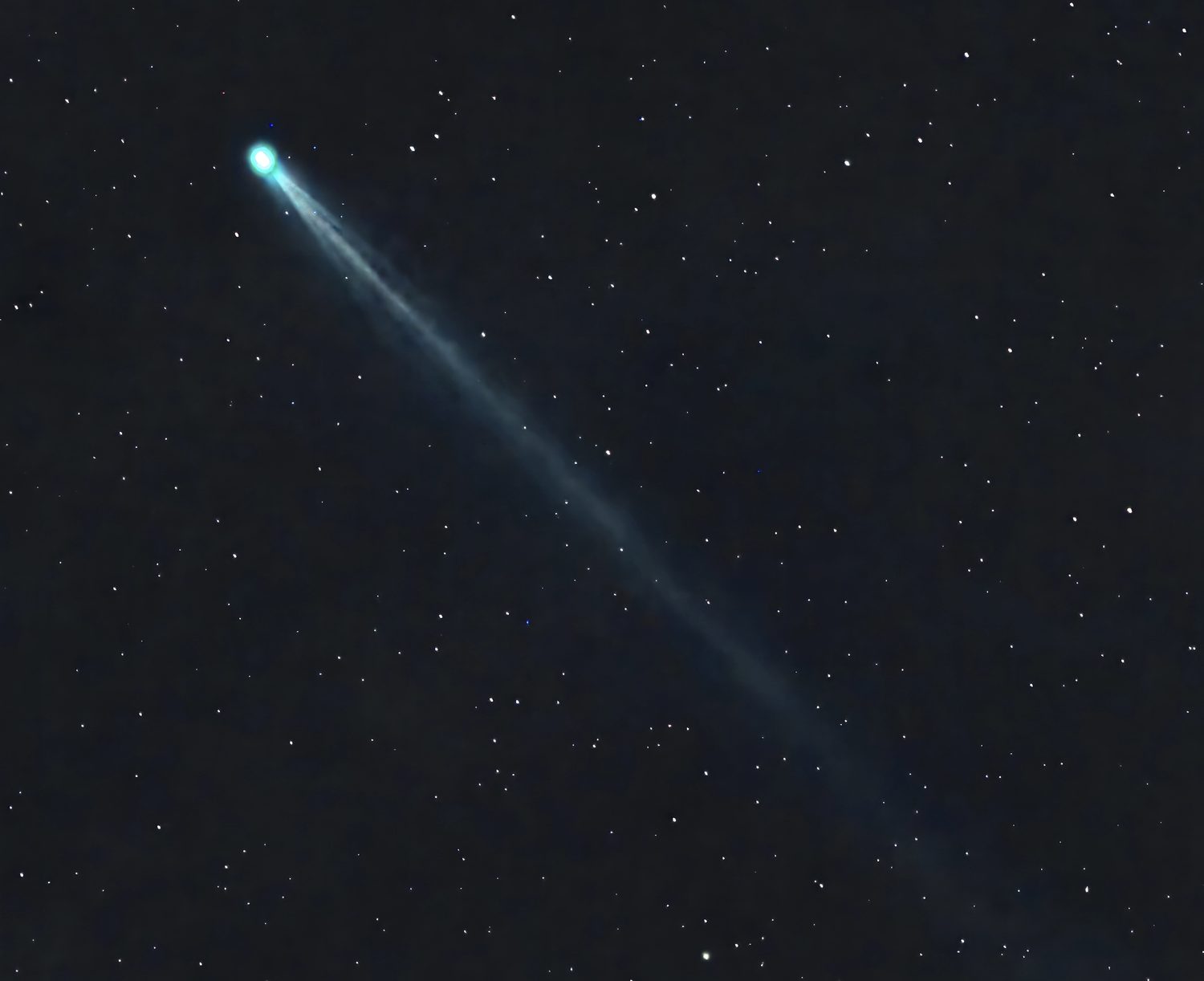
The first five are the lowest-numbered periodic comets, which are also the longest-known — a D/ prefix means the comet has been destroyed or lost. The last three are long-period comets, included because they are pictured above: Hale-Bopp, the most widely seen comet of the 20th century, and the two recent ones photographed at Lowell. Compare the two groups — the short-period comets orbit inside Jupiter's reach in a few years, while these three swing out for centuries on steeply tilted paths. A comet whose eccentricity reaches 1 is on an unbound orbit and has no semi-major axis or period to quote. Queried live from the catalog.
| Object | Diameter | a | e | i | Period |
|---|---|---|---|---|---|
| 1P/Halley | 11 km | 17.93 AU | 0.968 | 162.2° | 75.9 yr |
| 2P/Encke | 5 km | 2.22 AU | 0.848 | 11.4° | 3.3 yr |
| 3D/Biela | — | 3.54 AU | 0.751 | 13.2° | 6.7 yr |
| 4P/Faye | 4 km | 3.80 AU | 0.585 | 8.2° | 7.4 yr |
| 5D/Brorsen | — | 3.10 AU | 0.810 | 29.4° | 5.5 yr |
| C/1995 O1 (Hale-Bopp) | 60 km | 177.40 AU | 0.9950 | 89.3° | 2,360.0 yr |
| C/2022 E3 (ZTF) | — | — | 1.0003 | 109.2° | — |
| C/2023 P1 (Nishimura) | — | 57.77 AU | 0.9961 | 132.5° | 439.0 yr |
The 3-D viewer plots all 1,557,369 catalogued objects at a fixed instant. Each population can be isolated, so this family can be viewed on its own against the planets.